





Soft Merino Wool Sweater for Men, Knitted Fine and Fully Fashioned
Merino warmth is a fibre story before it is a knitting story. The yarn used here is spun from long-staple merino fibre, and the long staple is what lets a fine-gauge knit stay smooth: short fibres work their way out of a yarn and become pilling, while long fibres stay locked in and the surface stays clean. The camel tone shows every fault a knit can carry, which is exactly why it is a good colour to judge a factory by.
The yarn is dyed before knitting, so the colour runs through every loop and the inside of the sweater matches the outside. A ball of the exact yarn and a knitted panel in your colour travel with the sample sweater for your buyers to handle.
The Camel Crew Neck, Part by Part
The body is one clean field of fine camel knit, with no pattern and no mark on it. The crew collar is ribbed and sits close, the long sleeves end in ribbed cuffs at the wrist, and the body closes in a deep ribbed hem.
The back is as plain as the front, and the panels are fully fashioned: shaped on the machine and linked seam to seam, so the sweater keeps its line and the seams lie smooth under a jacket.
- Fine-gauge merino wool, plain knit
- Ribbed crew collar, cuffs and hem
- Fully fashioned panels, linked seams
- Long sleeves to the natural wrist
- No pattern and no mark, front or back
Fully Fashioned Knitting Is Why the Seams Lie Flat
A cut-and-sew sweater is trimmed from a sheet of knit and its edges are overlocked; a fully fashioned sweater is knitted to shape, panel by panel, and the panels are joined stitch to stitch. The difference shows at the shoulder and the armhole, where this sweater lies smooth instead of ridged.
Linking is slow hand-guided work, and it is where a cheap sweater gives itself away. On the sample, the buyer can turn the sweater inside out and run a finger along every seam before the range is priced.
Gauge Sets the Whole Character of the Sweater
The same merino yarn knitted fine gives a dress sweater that sits under a jacket; knitted heavier, it becomes an outer layer. The gauge is the buyer’s call, set at the quote stage and held across the run, because a range cannot mix hands on the same rail.
The sample is knitted at the chosen gauge and weighed panel by panel, so the weight the buyer approves is the weight that ships. A mid-season line and a deep-winter line can run two gauges of the same design, each sampled separately.
Merino Sweater Supplier in Bangladesh for USA Knitwear Ranges
USA knitwear ranges buy the plain merino crew as their winter workhorse: it colours well, layers well and sells across age groups. Their test is the hand feel at the rail, where a harsh knit is left hanging, so the yarn grade is chosen for softness first.
The size run can follow the chart their customers already buy, and the sweaters are folded flat with the collar protected so they shelf cleanly. Your yarn, your gauge and your label inside the neck: the knitwear lands ready for the floor.
Build Sheet for the Camel Merino Crew Sweater
| Yarn | Merino wool, fine long-staple |
|---|---|
| Knit | Fine gauge, plain stitch |
| Collar | Ribbed crew neck |
| Sleeves | Long sleeves, ribbed cuffs |
| Making | Fully fashioned, linked seams |
| Hem | Deep ribbed bottom hem |
| Label | Buyer’s woven label inside the back neck |
| Packing | Folded flat singly, cartons sorted by size |
| Colour | Camel as pictured, range colours on request |
How the Knitting Programme Grades Each Size
A sweater grade is written into the knitting programme itself: stitch counts and row counts per size, not a pattern stretched afterwards. Chest, length and sleeve move together from the buyer’s chart, so the large size keeps the same proportions as the medium.
The middle size is knitted first, washed and measured before the grade is released. Only then are the other sizes knitted, each checked against its own row in the chart rather than against the medium.
Measurements Read on the Middle Size
- Chest width across the linked side seams
- Length measured from the neck rib down
- Sleeve length to the cuff edge
- How the neck rib stretches and returns
- Weight of the finished sweater
Colours That Carry a Whole Knitwear Rail
Camel leads this page because it sits beside everything a man already owns. Around it the card holds the colours a merino range lives on: stone, grey marl, deep green, burgundy and cream, each dyed at yarn stage so the colour runs through the knit, not over it.
A range colour can be matched to a submitted swatch, with the dye lot approved on a knitted panel before the run. The sample sweater is knitted from the approved lot, so the hand and the colour the buyer approves are the ones that ship.
Fine Merino Knitwear From Bangladesh for UK Winter Ranges
UK winter ranges buy the plain merino crew as a layering piece, worn under coats from October onward. Their first check is whether the knit is fine enough to sit under a tailored jacket without bunching at the shoulder, which is exactly what the fully fashioned shaping gives them.
The care print follows the wash the sample was proven at, written in the wording their customers expect. Delivery is planned backwards from the autumn drop, with knitting time reserved at confirmation, because linking cannot be hurried at the end.
What the Sample Sweater Proves Before the Run Is Knitted
The sample sweater is knitted, linked and finished exactly as production will run, in the middle size. The buyer washes it, wears it and turns it inside out: the three checks a merino sweater actually has to pass, done on the real yarn.
Whatever the buyer marks on the sample is entered into the knitting programme itself, so the correction is knitted in, not sewn over: a deeper cuff, an eased body, a firmer collar. The opening sweaters off the run are laid against the sample on the table and read panel by panel before the rest are linked.
- One sweater knitted exactly as the run will knit
- Buyer’s wash and wear verdict before production
- Inside seams inspected stitch by stitch
- Corrections entered into the programme
- Opening sweaters laid against the sample
How Finished Sweaters Are Folded and Packed
Knitwear is never hung for shipping: each sweater is folded once, with a sheet between the folds so the linking leaves no mark, and the collar is left uncreased. A folded sweater comes out of its bag needing nothing but a shake before it goes on the rail.
Cartons carry one colour at a time with the sizes layered in order, and the outer mark repeats the buyer’s own size names. Where a range sells the sweater boxed, the folding is adjusted to the box at the sample stage, not improvised at the packing table.
Merino Breathes, So One Sweater Covers Two Seasons
Merino fibres take up moisture vapour and release warmth as they do it, which is why a fine merino crew works in October and again in March. A range can therefore carry this sweater across two drops instead of one, in the deep colours for winter and the lighter ones for spring.
That breathability is also why the sweater layers without clamminess under a coat. The sample tells the story quickly: a buyer who wears it for a day, indoors and out, feels the difference a synthetic knit cannot copy.
Pilling, Answered Honestly
Every wool sheds a little at first; what separates a good sweater is how fast it settles. Long-staple yarn, tightly spun, sheds less from the start, and the knit here is finished so the loose fibres leave in the first washes rather than on the customer’s shoulder.
The sample wash is where this is judged: the buyer washes the sweater as their care label will direct and reads the surface afterwards, under a good light. A range wanting an even harder surface can choose a tighter twist at the yarn stage, accepting a slightly firmer hand in exchange.
- Long-staple yarn, tightly spun
- Loose fibres leave in the first washes
- Sample washed exactly as the care label directs
- Tighter twist available for hard-wear ranges
Where a Fine Merino Crew Sits in a Winter Range
Most winter rails are built in layers of price: a hard-working acrylic at the entry, blends in the middle, and one knit at the top that makes the rest look honest. A fine merino crew is that top knit. It is the sweater a customer touches first, the one the shop puts in the window, and the one whose quality quietly vouches for everything hanging beside it.
That position is why the details on this sweater are finished the way they are: linked seams that lie flat, a collar that holds its rib, and a surface with no pilling shortcuts hiding in the yarn. A range can sell a cheaper sweater beside it without embarrassment, because the merino at the top of the rail is genuinely what it claims to be.
The Colour That Anchors the Rail
Camel is the anchor colour because it works across the whole rail: it sits beside navy, charcoal and burgundy without fighting any of them. Ranges usually open with camel and one dark tone, then add colours in the second drop once the fit has proved itself.
More Knitwear From This Floor
Buyers building a full knitwear wall can source the neighbouring styles from the same machines: a women’s cashmere sweater where the range wants a softer hand, a merino wool jumper on a second fit block, the hooded wool cashmere hoodie, and a textured maroon cable knit sweater for the statement rail.
Buyers researching a soft merino wool sweater for men and other knitwear sourcing can also read exporter profiles kept by the International Trade Centre.
Questions Merino Sweater Buyers Ask Before Ordering
Is the yarn pure merino, or is it blended with synthetics?
This sweater is knitted from merino yarn as specified at the quote stage, and the fibre content is printed on the buyer’s label spec. Where a range wants a blend for a harder-wearing line, that is a separate, clearly named option, never a quiet substitution in the plain merino sweater.
Can the sweater be knitted in a V-neck for a German uniform range?
Yes. The neckline is a programme choice: the same body can carry a V-neck or a higher crew for uniform and workwear ranges, with the rib depth set to the range’s standard. The changed neckline is knitted on the sample first, so the buyer approves the real collar before the run.
Will the sweater keep its shape after washing?
The sample is washed before approval and measured again, and the run is knitted to the post-wash figures, so the size on the label is the size after washing. The ribbed collar, cuffs and hem are read again after that wash, because their recovery is what keeps the sweater looking new.
Can we order this sweater with a half-zip for a Canadian golf range?
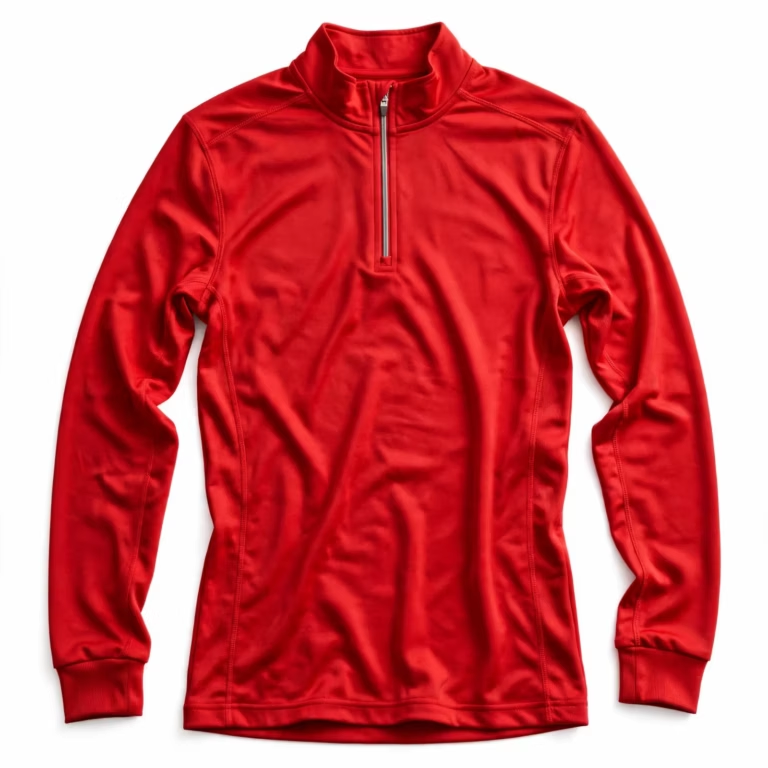
Yes. The neckline is a programme option, and a half-zip with a short stand collar is knitted on the same body block for golf and leisure ranges. The zip is colour-matched to the sweater, the sample carries the real zip, and the Canadian size chart is written into the programme before knitting starts.
Quoting a Merino Range for Your Rail
To price the range we need three things from you: the gauge, the colour card and the chart your customers buy by. Send those and the figures come back built on your inputs alone; a sweater from your current supplier, or a clear photograph of one, is reference enough.
The price is built from the yarn you choose and the gauge you set, nothing else hiding inside it. Tell us those two things and the sizes you sell, through the contact page, and the sample sweater joins the knitting queue this week, made at your level in every stitch.