




Mali Wholesale Hoodies: Your Label, Our Sewing Lines
A wholesaler in Bamako who sells through market stalls and clothing shops needs one thing above all: mali wholesale hoodies that arrive in his own name, in colours his customers ask for, at a landed cost his margins can carry. This camel fleece pullover is that product, sewn as a clean blank for your brand.
Every bale leaves here sewn to your standard alone: the quality you set in the fleece and the seams, the fabric weight and shade you pick, the design you draw in the hood and the fit, the measurements written on your own chart. Our name appears nowhere on it. Your label carries the garment from the first stall to the last.
Materials – The cloth is a warm camel fleece, smooth on the face with a brushed, kind inside that suits a cool harmattan morning. We weigh it when your sample is cut and weigh it again on the bulk, so the softness your customers learn is the softness they find on the reorder.
Functionality – A roomy hood on flat drawstrings for dusty wind, raglan sleeves that let a man lift, ride and carry without the body riding up, and a front left plain and pocket free so the garment hangs clean on a retail rail. Nothing decorative, everything deliberate.
Size – Your chart is the only chart on the cutting table. Chest, body length and sleeve are cut to your figures on the sample and held to them on the bulk, graded in the generous steps West African retail prefers.
Customisation – Your woven label goes inside the back neck during sewing, your care words are printed as you write them, and your hangtags and polybags carry your artwork alone. Pick the shade, set the weight, choose the fit: the garment answers to your level in quality, fabric, design and measurement alike.
Order the camel sample with your own label sewn in and put it through a wash before you judge it. The contact page is the fastest way to start, and the sample travels by courier.
The Camel Fleece Pullover, Part by Part
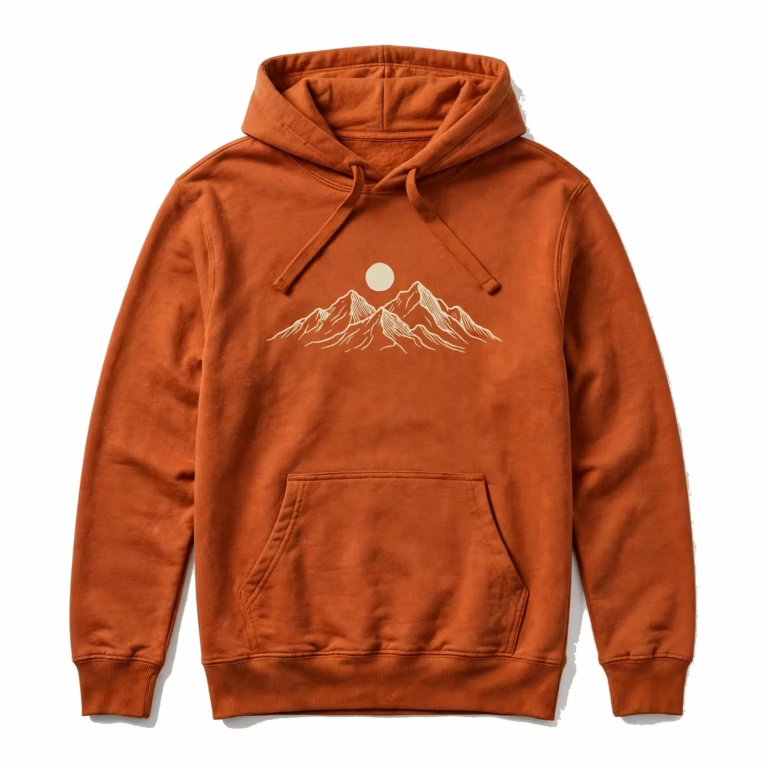
The front is plain camel fleece with no pocket and no print, because a wholesale blank earns its place by what a retailer can do with it. The cloth carries the garment: a smooth face, a brushed back and a shade that sits well beside denim, chinos and traditional trousers alike.
The Drawstring Hood
The hood is cut roomy and finished with two flat drawstrings in the same camel fabric, hanging at the front neck where the wearer can reach them without thinking.
- Roomy hood with a clean centre seam
- Two flat self fabric drawstrings
- No metal tips to scratch or tarnish
- Hood lies flat at the back when down
The Raglan Sleeves
The sleeves are set in raglan style, with the seam running from the neck to the underarm. That line gives the shoulder a smooth shape and lets the wearer lift, ride and carry without the body pulling up.
- Raglan seams from neck to underarm
- Smooth shoulder line, no boxy corner
- Free movement across the back
- Sleeves hang straight, never twisted
The Ribbed Cuffs and Hem
Deep ribbing closes the cuffs and the hem band, holding warmth in and keeping the silhouette tidy on the rail. The rib is knitted to recover after washing, so the garment keeps the shape your customer first tried on.
- Ribbed cuffs that grip without squeezing
- Hem band sits flat over trousers
- Stitching matched thread to thread
- Shape held wash after wash
Why Mali Buyers Source Hoodies From Bangladesh
Mali is a landlocked market, so every bale a wholesaler lands in Bamako has already travelled far and paid its way through a port and a long road. That journey makes the buying price matter twice: once at the factory gate, and again in the margin left after transport.
Bangladesh answers both halves of that problem. Its fleece lines sew pullover hoodies at volumes that keep unit costs honest, and its exporters are used to packing for long overland legs, with cartons that survive the road from the coast without crushing the garments inside.
- Buying price: factory gate costs that leave room after freight
- Season fit: fleece weight suited to harmattan evenings
- Packing: firm cartons for the port to Bamako road
- Repeat supply: the same style reordered season after season
For a Malian importer, the question is never only what a hoodie costs in the factory. It is what the hoodie earns on a stall in Bamako or a shop shelf in Sikasso, and that earning starts with a maker who understands the whole route.
Hoodie Manufacturer in Bangladesh for Mali and West African Importers
Siatex sews this pullover in Bangladesh for importers who sell across Mali and the wider West African market. The camel shade in the pictures is one buyer’s choice; your range can run in the colours your own customers ask for by name.
Hoodie Supplier in Bangladesh Serving Bamako Wholesalers
Bamako is where most Malian wholesale trade clears, and its buyers want one style that moves in every quarter of the city. A plain fleece pullover with no print and no pocket does exactly that, because every retailer can price it his own way.
Hoodie Exporter in Bangladesh Shipping Towards Sikasso and Kayes
Regional traders carry stock onward to Sikasso, Kayes and the border towns, so cartons are packed by size and colour in a way that survives being opened, split and repacked along the route. The packing list mirrors the carton marks, which keeps counting simple at every stop.
Build Sheet for the Camel Fleece Pullover
Before a single panel is cut, we agree a build sheet with you and sew the bulk against it, so what arrives in Bamako is your approved sample repeated bale after bale. These are the standard lines for this pullover, and every one of them can be reset to your level.
| Fabric | Brushed fleece, smooth face, weight set by your sample |
| Body colour | Camel as pictured, or your own colour story |
| Hood | Roomy hood, flat self fabric drawstrings, no metal tips |
| Sleeves | Raglan sleeves with ribbed cuffs |
| Hem | Ribbed hem band, flat finish |
| Front | Plain, pocket free, ready for your print or embroidery |
| Label | Your woven label inside the back neck |
| Sizes | Your chart, graded to your market |
| Packing | Folded in your polybag, cartons marked by size and colour |
Think of the sheet as the garment’s passport. It travels with the order from cutting to carton, and when the reorder comes in, the same passport comes out of the file, so nothing depends on anyone’s memory of what was sewn last season. Keep your copy beside the invoice, and check the first bale against it when the cartons reach Bamako.
A Label That Is Sewn In, Not Stuck On
Look at the label picture in the gallery: inside the hood, against the brushed fleece, sits a woven label. On your order that label carries your name, stitched in while the garment is being made, so no wash, no season and no trader’s shelf can separate your brand from your product.
The rest of the branding follows the same rule. Your hangtag hangs from your artwork, your care label reads in your words, and your polybag is printed before the garments are folded, never stickered afterwards in a warehouse.
- Woven label: your name inside the back neck
- Care label: your wording, your language
- Hangtag: your artwork and price space
- Polybag: your print, your warning text
How Your Cartons Are Checked Before Sealing
A hoodie bound for a landlocked market cannot come back for a loose thread, so faults are hunted while they can still be fixed. Checkers walk the sewing line during production, and finished garments go through a final table check before anyone folds them.
That final check works from your approved sample outward: shade under daylight lamps, a tape measure across sampled pieces from every size, raglan seams pulled firm, drawstrings seated, ribbing stretched and released. Only then are cartons counted against the packing list and sealed.
- Shade: checked under daylight lamps
- Measurements: sampled from every size
- Stitching: seams pulled and inspected
- Count: cartons reconciled with the list
Your Sample, Branded Before It Leaves
Send us your size chart and your label artwork, and the first camel pullover comes back already wearing your label, cut to your figures. It is a selling sample, not a factory sample: you can price it, photograph it and take orders against it.
Test it the way a customer in Bamako will. Wash it, hang it in harmattan dust, pull the ribbing, wear it on a cool evening. Send back every complaint, and the bulk is sewn against the corrected sample, with your notes pinned to the build sheet.
Grading for the Malian Market, Not for Ours
West African retail sells hoodies generously cut, because the garment is worn over shirts and traditional dress through the cool season. Your grading can follow that habit exactly, with chest and length steps set from your own best selling sizes.
If your shops sell to students, traders and riders in the same week, the size run can stretch wider without changing the style. One style, one label, many wearers: that is what makes a wholesale hoodie worth its carton space on a long road journey north.
The Second Order Decides Everything
A first order proves a factory can sew. A second order, arriving in the same camel shade with the same hand feel and the same measurements, proves it can be trusted with a season. Wholesalers build their cool season trade on that second order, and so do we.
Your approved sample, your label plates and your build sheet stay on file here between seasons, so the reorder begins from paper, not from recollection. When your traders ask for the same hoodie again, the answer is a date, not a discussion.
Colour Stories Under One Label
Camel leads this page because it photographs honestly and sells across ages, but a wholesale range usually runs wider. Buyers often pair the camel with deep green, charcoal, rust or ochre, building a rail that looks rich without risking unsold shades.
Each colour runs on the same pattern and the same build sheet, so your customers learn the fit once and buy it in three shades. Colour is your call at order stage; the sewing standard does not move.
Questions Mali Buyers Ask About Wholesale Hoodies
Can a Bamako wholesaler order this hoodie under his own label?
Yes. The pullover is an OEM build, so your woven label, hangtag and packing carry the order from the first sample. Nothing on the garment names the factory, and your customers see only your brand.
How do hoodies from Bangladesh reach a landlocked market like Mali?
Cartons sail to a West African port such as Dakar or Abidjan and travel onward by road to Bamako, the route Malian importers already use for clothing. Packing is specified for that journey, with firm cartons and clear marks.
Can a Sikasso retailer take a smaller mixed order?
Mixed orders by size and colour are a normal way to start, arranged through your Bamako wholesaler or directly with us. The build sheet stays the same, so a small first run and a large reorder are the same garment.
Starting a Mali Hoodie Range the Right Way
Start with the sample in your label, one colour, your full size run. Sell it through one cool season in Bamako, note which sizes clear first, and let the reorder follow the evidence.
When you are ready, send your chart and artwork through the contact page, compare this pullover with our wider hoodies manufacturer in Bangladesh range and the plain custom beige cream hoodie it was developed from, and look at the zip up hoodie manufacturer line if your shops also ask for zip fronts. Trade buyers can also find our export profile through the International Trade Centre.