






Wholesale Uniforms Manufacturer in Bangladesh for Cyprus
Uniform buying in Cyprus runs with the seasons, and buyers here need a programme that starts from their own written requirement. Siatex sews each set in Bangladesh only after the buyer settles the twill, the olive shade, the size run and the label, so nothing is made ahead of approval.
The set joins a short-sleeve camp-collar shirt to flat-front trousers in the same olive cloth. Hotels, resorts and service companies across the island issue it to their teams, because a single maker answerable for both pieces keeps shade, fit and finish steady from one delivery to the next.
Cut and Sewn New in Bangladesh From the Buyer’s Own Brief
There is no ready rail behind this programme. Work begins when the buyer’s brief lands: pattern, cloth call, button shade and packing method are taken from that document, and the Cyprus order is sewn as a job of its own, from the first cut panel to the final press.
The buyer feels the benefit when something changes. A pocket moved, a hem deepened or a label repositioned is picked up by the next order at once, instead of waiting behind earlier making, and each carton in the shipment carries the same change, checked against the brief before dispatch.
Olive Twill Built for Cyprus Working Days
A cotton and polyester twill does the work here, chosen for long shifts under a hard island sun. The cotton share keeps the hand dry and natural; the polyester share holds the crease, fights shrinking in the wash and keeps the olive true through heavy commercial laundering.
Weight and blend are the buyer’s call, and the mill weaves to it. Outdoor grounds crews may want a heavier cloth to stand up to rough work, while reception teams pick a lighter one for comfort indoors; both orders share the same lines and the same checking routine.
Wholesale Uniforms Supplier in Bangladesh for Spain Importers
Spanish importers weighing this Cyprus programme against our Spain uniform programme find one structure under both. Cloth call, measurement chart and label all stay with the importer; the factory’s part is to hold them steady through every repeat order the year brings.
An importer resells that steadiness. A Spanish workwear house can promise its clients the same set season after season because shade lots are matched to the approved sample, buttons are bought against a single specification, and the fiftieth carton is packed to read exactly like the first.
Camp Collar, Button Placket and Folded Sleeve Hems
A flat camp collar shapes the neckline, lying open without a tie in the way warm Cypriot workplaces prefer. Down the front, a stitched placket carries buttons dyed to the olive of the cloth itself, so the whole front settles into one calm, even surface.
There are no cuff bands on these sleeves. Each short sleeve ends in a plain folded hem, stitched flat, which dries fast after washing, never traps heat against the arm and cannot perish the way elastic does. Hem depth follows the buyer’s pattern and is sewn evenly on both sides.
Buttoned Flap Pockets on the Shirt, Working Pockets Below
A buttoned flap closes each chest pocket, and the buyer sizes the pocket itself, wide enough for the order book, pen or handset a shift carries. The pair sits level across the chest, corners reinforced at the strain points, flap buttons matched to the placket buttons in shade and size.
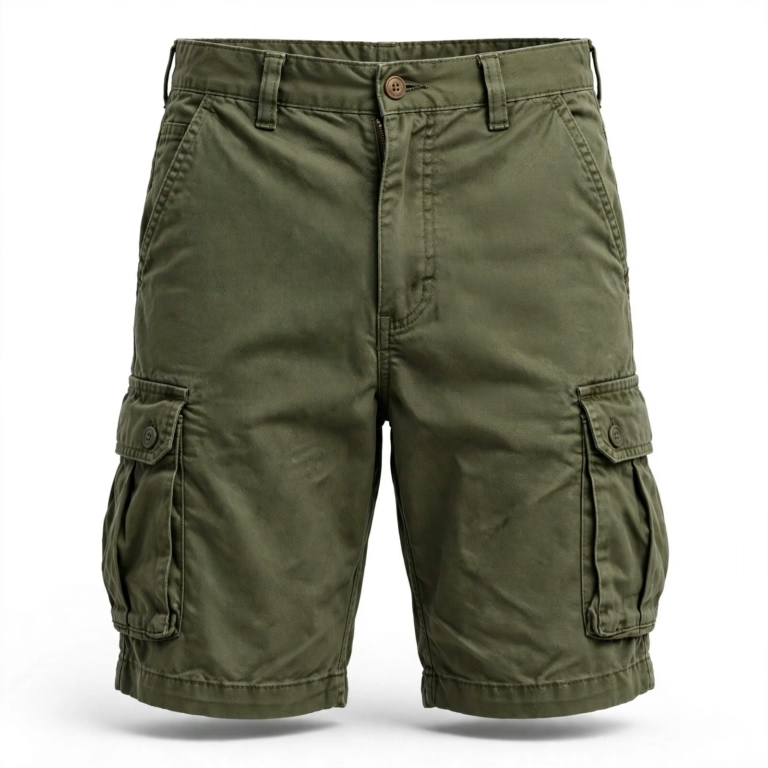
The trousers keep their storage simple: slanted pockets at the sides, deep enough for a gloved hand, and a single buttoned pocket behind. Even the pocket bags are cut from the body twill, so they age at the same rate as the legs and never show pale through the cloth.
Wholesale Uniforms Exporter in Bangladesh for Germany Companies
For German companies, the programme ends in a clean export shipment. Sets leave packed by size and colour, cartons marked in the buyer’s own format, and the paperwork raised from the same specification sheet the sewing line worked to, so what was sewn and what is declared stay the same thing.
A facility group running sites in several German cities feels that discipline at the door of each site. Every address draws labelled cartons from the same bulk, and because one approved sample governed the run, shade, chart and label read the same in every city.
A Plain Surface Waiting for the Buyer’s Brand
Nothing of the factory appears on the finished set: no house mark, no printed chest, no woven badge. Cyprus buyers brand the set themselves, with an embroidered house name over the pocket, a heat-sealed logo, or no outside mark at all beyond their own label at the neck.
The plain surface keeps later choices open too. One season a hotel group embroiders a single property’s name; the next season another property takes the same set, while construction, cloth and shade stay exactly as approved, so the wardrobe never has to be reinvented between orders.
One Olive Held From Sample to Last Carton
Olive shows every dyeing fault. Two lots hung side by side under warehouse light will disagree at a glance, so the buyer’s approved swatch rules every lot on this programme, and any cloth that wanders from it is stopped before cutting, never after the garments are sewn.
The guarding continues while the sets are sewn. Panels for one garment are drawn from a single cloth lot, buttons are matched to the dyed standard, and each finished set is read under daylight lamps before pressing, so a whole crew steps out in one calm, even olive.
Wholesale Uniforms Wholesaler in Bangladesh for Netherlands Distributors
For Netherlands distributors the set is catalogue goods under their own label. They fix the chart, the shade and the packing from their side; the factory answers with finished sets that drop straight into the range, needing no further making before they can be sold on.
The proof comes on the second order. The distributor returns with the same specification, the line works against the retained sample and chart, and the new delivery sits comfortably beside the first on the same rail, close enough that customers never notice a join between seasons.
Cloth Weight and Blend Decided by the Buyer
Weight works the same way on our Tanzania workwear programme: it is set by the buyer, never taken from a shelf. Cyprus buyers state the weight their shifts demand, the twill is woven and finished to that call, and only then does cutting begin on the order.
Blend is settled the same way. Cotton can be raised for a softer hand on the skin, or polyester raised where crease recovery and long wash life matter more; whichever ratio the buyer chooses is the ratio the sample is sewn in, so approval judges the real cloth.
Sizes Graded From the Buyer’s Measurement Chart
Grading starts from the buyer’s paper, not ours. Chest, shoulder, shirt length, waist and leg readings arrive in the Cyprus buyer’s own format, the pattern room grades each size from those figures, and the fit that comes back matches the crew who were measured for it.
Before the sample travels, it is laid flat and measured against the chart at every listed point. A reading outside the buyer’s tolerance goes back to the pattern for correction first, which is what keeps the bulk honest to the figures the buyer approved at the start.
The Sample Set Comes First, Bulk Follows Approval
One set is always made first, complete to the buyer’s specification, and sent for judgement. The buyer handles the cloth, reads the olive against their standard, checks the fit on the chart and the label in the neck, long before any bulk quantity is discussed, let alone authorised.
Nothing moves to bulk behind the buyer’s back. Comments come back on the sample, adjustments are made where the buyer asks, and only the approved version reaches the cutting table, leaving the buyer a physical standard against which the whole delivery can later be judged fairly.
Seams, Stitching and Finishing Checked Closely
Seams decide whether a set survives the job. Shoulders are sewn flat under the yoke, side seams are kept straight so the body never twists, and the trouser fork is stitched to carry climbing, kneeling and lifting shift after shift without giving way at the strain point.
A checker works down each set with the specification in hand: stitch counts per seam, buttonholes opened clean and matched to their buttons, pocket corners bar-tacked, every loose thread snipped, and any set failing a point sent back for correction before folding.
More Markets Take Uniform Sets From This Bangladesh Factory
Cyprus owns this page, yet the set itself travels much further. Portugal, Belgium, Denmark, Sweden and Norway all run it under their own charts and labels, and our Jamaica uniform programme carries the pattern to Caribbean buyers, every market keeping its own specification on the shared lines.
Spain, Greece, the United Kingdom, the United States and Australia all order through the programme, and enquiries arrive from Saudi Arabia, Oman and the United Arab Emirates. The garment itself never changes from market to market; the chart, the shade and the label are what change.
How a Buyer Judges a Uniform Set
At the buyer’s warehouse the set is judged in a fixed sequence: the cloth is handled first, the shade is read against the swatch, the chart readings are taken, and only then do seams, pockets and buttons get their turn. The programme passes because the line worked from the buyer’s own document.
Because both sides hold the same document, delivery day holds no surprises. A questioned reading goes back to the approved sample and the written chart, measurement answers it, and the relationship stays calm through order after order, season after season, without opinion ever entering the room.
Your Label Woven Into the Back Neck
Every shirt carries the buyer’s woven label inside its back neck, centred on the yoke seam where crews and laundry hands look first. In this page’s pictures that label reads YOUR LABEL, because the space waits for the buyer’s name and carries nobody else’s.
Artwork is supplied by the buyer and followed exactly: the name, the wording, the size marks in the buyer’s chosen positions. The label is woven and set as the approved sample shows, nothing of the factory is added anywhere, and the wearer sees the buyer’s brand alone.
Packing and Delivery Arranged for Cyprus
Pressing and folding finish the making, and packing follows the buyer’s instruction to the letter: single sets bagged for direct issue, or sizes grouped for a central warehouse. Marks go on the cartons, the breakdown on the carton end, and the packing list repeats the figures inside.
Cartons for Cyprus are built to travel: collars arrive uncrushed, trousers unfolded by the journey, everything ready against the buyer’s schedule. The test at the far end is simple: open the carton, read the label, issue the set, with no sorting or pressing before first wear.
Why Cyprus Orders Its Uniform Sets From Bangladesh
Distance is why Cyprus buyers choose carefully. An island wardrobe cannot be topped up from a nearby warehouse, so the making has to be right first time; Bangladesh answers with deep twill experience, pattern rooms fluent in European charts and finishers who treat a plain set with full care.
Honest value completes the case. A set sewn fresh to order, in the buyer’s cloth and to the buyer’s chart, lands in Cyprus below the cost of a comparable set drawn from a European warehouse, and the saving never comes from thinner cloth or lighter stitching.
Order at Your Level: Your Quality, Fabric, Design and Measurement
Siatex works inside the trade structures that govern garment exports from Bangladesh, and we are members of the Bangladesh Garments Buying House Association, a connection Cyprus buyers can verify directly. Membership sits alongside the factory’s own checking routine rather than replacing it, and both stand behind every shipment leaving for Cyprus.
Taken together, the programme offers Cyprus buyers a wholesale uniforms manufacturer in Bangladesh for Cyprus that works the way they work: their cloth, their chart, their label and their standard, sampled first and sewn in bulk only on their word. Send the specification, and the first sample set follows from it directly.
Read More: Wholesale Uniform Questions Buyers Ask
Can the shirt and trousers be ordered in different size ratios?
Yes. Tops and bottoms follow separate counts on the same order, because the buyer writes the breakdown. A resort may take more trousers than shirts for its grounds team and the reverse for reception; cutting follows the written figures, and cartons are marked so each count is easy to check.
How does the buyer fix the olive shade before bulk production?
A reference anchors it: a swatch, a shade card or a cutting from a garment already approved. The sample set is made against it, and once the buyer approves the sample, that shade is locked for bulk; each cloth lot is compared with the sample before cutting, so a drift is caught early.
Can the pockets be changed for a specific trade?
Yes, freely. Pocket count, size and position are pattern points, so a buyer serving a different trade can deepen a shirt pocket for a handset, add a second pocket behind, or reshape the flaps altogether; the changes are proven on the sample before any bulk is cut.
What does the buyer need to send to start an order?
Very little: a written note of the cloth and its weight, the shade reference, the measurement chart, the size ratio and the label artwork. Those points are enough to build the sample set, and the buyer’s comments on the sample settle the rest before bulk begins.
How are the sets packed for delivery to Cyprus?
Packing follows the buyer’s instruction: sets pressed and folded, then either bagged singly for direct issue or grouped by size for warehouse intake. The breakdown and the buyer’s marks sit on the carton end, the list inside repeats the contents, and the Cyprus warehouse checks delivery in minutes.