






Polo Shirts Supplier in Bangladesh for Philippines
From Manila call centres to Cebu resorts, the polo is the uniform the Philippines works in, and the firms supplying those uniforms cannot afford surprises at delivery. Every order is sewn from scratch in Bangladesh, following the buyer’s specification, so what lands in the warehouse is what was promised.
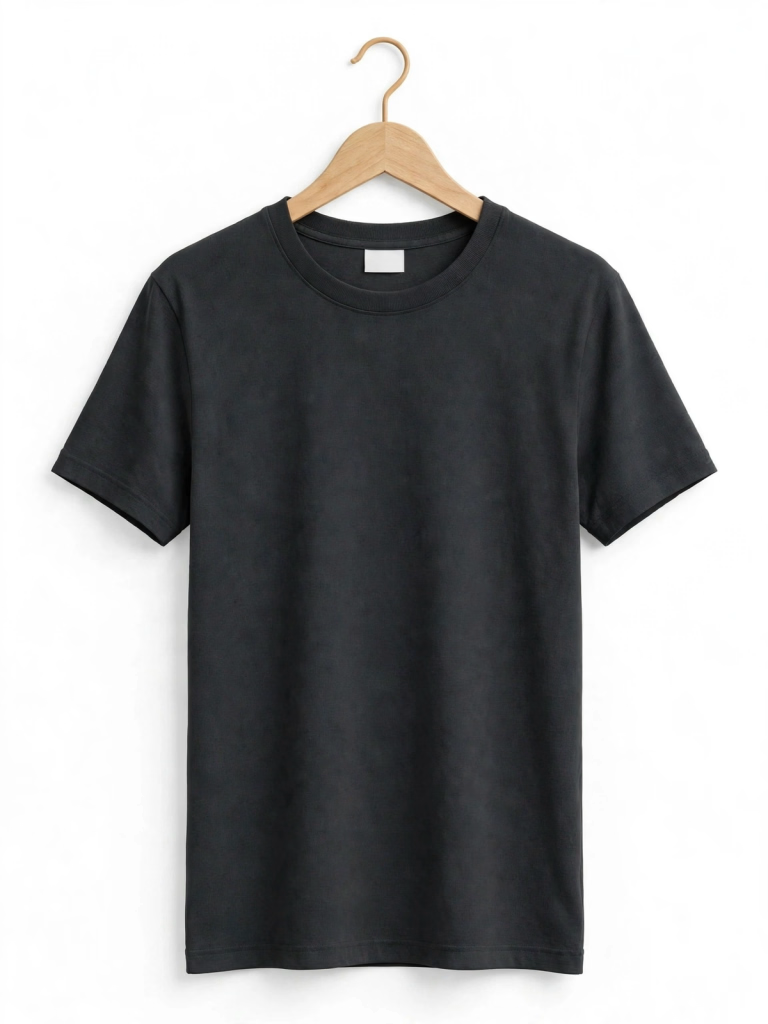
Look at the shirt in the photographs: a men’s polo in a deep charcoal grey, photographed in size L. The piqué surface shows its little cells openly, the knitted collar sits level above a short placket fastened with two buttons, ribbed bands finish the sleeves, and nothing is printed or stitched onto the cloth.
Sewn New Against Your Written Brief
Work starts with the document you send, never with garments already made. That document fixes the yarn, the weight of the cloth, the exact grey, the spread of sizes and the wording of the label before cutting begins, and every bench in the sewing hall works to it until the cartons close.
Alterations stay simple because of that discipline. Ask for a deeper cuff, a different button colour or an extra size on a later order and the revision runs through the entire consignment, since each panel, seam and box in it was produced after the revised document arrived.
Charcoal Grey Piqué, Honest to the Eye
Plain cloth tells the truth about itself, which is why buyers of uniforms trust it. Hold this piqué to the light and the honeycomb cells sit in even rows, the yarn shows real fibre, and the surface stays matte, like clothing that has been worn and washed rather than rendered.
Consistency of shade receives the same care. The collar, the body panels, the sleeves and the little ribbed bands all come out of a single dye bath, so no component quarrels with its neighbour when the shirt hangs under fluorescent tubes. Incoming yarn is checked for level colour, cleanliness and wash behaviour before knitting starts.
- Yarn, cloth weight and hand feel fixed inside the buyer’s brief
- One dyed yarn lot running through body, sleeves and bands
- Piqué cells and fibre readable at an ordinary viewing distance
- Colour matched to the buyer’s own reference before knitting
The Collar, the Placket and the Cuff Bands
A polo stands or falls by its collar. Ours is knitted separately, then attached so both points rest level and the fold stays crisp after repeated laundering. The sample stage settles its depth and stiffness, because a collar that curls makes a new shirt look tired within a month.
The placket beneath it is backed with a firm facing, so the opening hangs straight and the buttonholes keep their shape. Two buttons, toned to the charcoal cloth, do the fastening. Ribbed bands around the arm grip gently without pinching, and the hem is stitched level from side to side.
A Blank Chest Ready for Your Mark
There is no emblem on the chest, no lettering down the sleeve, no badge on the back. That emptiness is deliberate: the shirt leaves here as a clean field for whatever identity the buyer brings, ready for a house label at the neck and, if wanted, a crest or name added later.
Decorations are never guessed at. Suppose you want an embroidered logo over the heart or a print across the shoulders: the design is worked onto a trial shirt in this charcoal piqué and sent for your verdict, and production copies it only after approval, as our polo shirts supplier for Ireland clients arrange theirs.
One Grey Lot From Sample to Carton
Grey is an unforgiving family of shades. A touch too much depth and charcoal reads as black; a touch too little and it fades towards silver. The target therefore comes from your own reference, a swatch, a photograph or a shirt that already sells, and the dye house works to that and nothing else.
Within one order, mixing dye batches is forbidden. Panels for body, sleeves and trims are cut from cloth knitted out of a single batch, so shirts displayed side by side on your rail keep one identical tone. The shade is examined under controlled light at the trial stage and again in production.
- Target shade settled from the buyer’s reference before knitting
- One dyed yarn lot feeding body, sleeves and bands
- Shade checked under steady light at sample and bulk stages
- Approved sample kept as the standard for repeat orders
Weight and Hand Feel Chosen at Your Desk
How heavy the cloth should be is your commercial decision, not a factory habit. A supplier dressing security guards and delivery riders picks a sturdier piqué that shrugs off daily washing; a supplier dressing office staff picks a softer, lighter knit. The trial shirt is made at whichever weight you name.
Fibre content obeys the same principle. State the blend your customers prefer and the yarn is spun accordingly; the trial shirt then demonstrates how that blend feels against the skin, how it drapes and how it dries after washing, at a stage when swapping it costs nothing.
Your Chart Grades Every Size
Measurements come from your chart alone. Its figures for chest, shoulder, sleeve and body govern the pattern, size after size, and each size is sewn as a test garment and measured flat before the pattern is released, so the fit your regulars rely on does not drift between orders.
The photographs show the outcome in size L: a body with its proper depth and sleeves that end where a working sleeve should end. If your market prefers a looser silhouette, raise the chest figure on the chart and a fresh trial garment demonstrates the new grade before production adopts it.
First a Sample, Judged in Your Hands
Before any production run, a single shirt travels to you. It carries your yarn, your grey, your grading and your label, and it has already been through a wash, so you judge the garment your customers will actually live with. The production hall stays idle on your order until your verdict arrives.
Once approved, that shirt becomes the reference everything else is measured against. Pieces leaving the line are laid beside it and compared for shade, knit, collar shape, band tension and dimensions; anything that strays is removed on the spot. A late change of mind sends the order back to the trial stage, not into production.
Every Seam Read Garment by Garment
Assembly decides how a polo wears. A shoulder set even slightly crooked twists the body, a collar mounted off centre ruins the neckline, and a wandering side seam spoils the hang, so machinists and checkers examine each of these points on every single garment, not on a sample of the batch.
The reverse side is inspected with equal seriousness. Seams are traced end to end for skipped stitches or thin places, seam allowances are pressed so they lie flat against the wearer, and stray threads are snipped before the shirt is folded.
Checks at Each Stage of the Line
Rather than one inspection at the end, readings happen all along the route. Yarn is passed on arrival, cut panels are passed before sewing, and the completed shirt is passed only after a head to hem comparison with the approved trial garment and your chart, immediately before its carton is sealed.
Any piece that fails a reading is stopped where it stands. A laddered stitch, a panel drifting off shade or a seam pulling sideways means the component is remade from sound cloth, because a defect waved through the hall reappears later as a garment handed back over your counter.
- Incoming yarn read for shade, evenness and surface quality
- Cut panels checked for faults before sewing begins
- Finished shirts measured against the buyer’s own chart
- Final reading covering collar, placket and cleanliness
Your Name Inside the Back Neck
The single place any name shows on this shirt is hidden inside the collar, and the name there is the buyer’s. A woven label bearing your artwork is stitched in as the shirt is made, visible in the gallery photograph, and the identical artwork can continue onto swing tags, polybags and outer cartons.
Preparing it asks little of you. Send the artwork with your first enquiry; if none exists yet, a line of plain text suffices, the lettering is set here, a proof returns to you for checking, and no label goes under a needle until the proof has your written agreement.
Cartons Planned Alongside the Garment
Packing is designed at the same table as the garment, not invented at the loading bay. How each shirt is folded, whether it travels bagged, how many pieces fill a carton and what is printed on that carton are all written into the brief, and packed cartons are counted against it before release.
Within those lines the choices remain yours: individual bags for direct issue to staff, open folds layered in the box, strict sorting by size, or mixed ratios that mirror how your branches sell, with the carton face printed or left plain, each preference recorded in the document.
Polo Shirts Supplier in Bangladesh for Germany Importers
German importers tend to contract knitwear season by season, and a contract survives only while the tenth delivery still matches the first in colour, cloth and sizing. To protect that continuity your approved trial shirt is retained on file, and every subsequent consignment is compared with it before it is allowed to leave.
The gallery shows the method plainly: one dye batch, one collar construction, one band specification and one sewing plan repeated across the full size curve on the importer’s chart. Our polo shirts supplier in South Korea programme follows the identical method, its benchmark fixed market by market and defended through to the sealed carton.
Polo Shirts Exporter in Bangladesh for Canada Retailers
On a Canadian rail a plain polo is judged twice over: first against the branded garments hanging beside it, then in the hand of the shopper who lifts it down. This charcoal piqué is prepared for both tests, with a visible knit structure and trims that keep their outline through the season.
Ranges rarely stay still. A shop that begins with this single charcoal style commonly adds colours, then neighbouring garments, and each addition follows the same sequence of document, trial garment and only then production. That sequence governs our entire polo shirts manufacturer Bangladesh programme, where benchmarks are agreed before manufacturing starts.
Polo Shirts Wholesaler in Bangladesh for Netherlands Distributors
Distributors in the Netherlands feed retail chains and mail order houses whose buyers launder hard, wear daily and return whatever disappoints them. The answer built into this shirt is square shoulders, firm seams and cloth selected to remember its shape, with the trial garment put through a wash before approval is even requested.
Repeat business is where confidence between a distributor and a maker is truly established. When a fresh order arrives, work restarts from the filed document and the retained trial shirt, tracking whatever size curve and colour story the coming season demands, and drawing nothing from ageing warehouse shelves.
Further Markets Supplied From the Same Benches
Those three markets are not the whole map. Polo shirts sewn on these benches also travel to France, Belgium, Denmark, Sweden and Norway, across the ocean to Chile and Brazil, and onward to Malaysia, Hong Kong and New Zealand, each consignment produced against its own buyer’s document.
Destination changes nothing about the making. A chain store ordering under its private label and a small trader buying for resale share the same queue and clear the same trial garment hurdle; only their paperwork differs, together with the single decision of whether the charcoal body travels blank or branded.
Why the Philippines Sources Polo Shirts From Bangladesh
Across the Philippines the polo is standard working dress: on office teams in Makati, on resort staff in Cebu, on school groups in Davao, in a climate that punishes heavy cloth. Bangladesh answers with long polo making experience, careful hand finishing and yarn economics that keep a well made shirt within a working budget.
Geography is handled by planning rather than hope. Trial dates are fixed at the outset, sewing capacity is reserved against your selling calendar instead of left to luck, and cartons depart counted and clearly marked, so the check at your warehouse runs quickly against the agreed packing list.
Washed, Pressed and Measured Before Release
Shirts do not move to packing directly from the machines. Each one is laundered the way a household will launder it, then measured against your chart in that washed condition, with shrinkage, twisting and collar recovery all recorded, because the washed shirt is the garment the end wearer actually receives.
During the same pass the buttons are tested, the placket is inspected lying flat, and any collar that has lost its crisp line is pulled out. A shirt joins the carton only when its washed measurements agree with the approved trial garment on every reading taken.
Order at Your Level: Your Quality, Fabric, Design and Measurement
From one message, your whole standard reaches the floor: the shade we must match, the measurement chart your customers are fitted by and your label artwork travel together. Addressed to this polo shirts supplier in Bangladesh for Philippines, the message sets your quality, your fabric, your design and your measurement over every shirt sewn.
Every market we serve is served from this one floor, and we are members of the Bangladesh Garments Buying House Association. Route your brief through the Get a Price form on this page: the reply brings a sample sewn to your standard, and bulk enters the discussion only once that sample has your approval.
Read More: Polo Shirt Questions Buyers Ask
Can I order these polo shirts with my own label for the Philippines?
Certainly, and the earlier the better. Include the artwork with your enquiry and the trial shirt that returns to you already has your label stitched inside the back neck, exactly where the gallery photograph shows it, so branding is settled in your hands long before production quantities are discussed.
How are the cloth weight and hand feel set for our range?
That decision sits with you. Describe the life the shirt will lead, outdoor crews through the rainy months, office teams in air conditioning, or schoolwear washed every week, and the weight and yarn are chosen to suit it. No factory table overrides your judgement; the trial garment shows the outcome in your hands.
Can the polo shirts be made in our own size range and fit?
Completely. Grading begins from your figures and from nothing else: tell us which sizes your buyers genuinely take and whether your fit should run regular, like the size L photographed here, or more relaxed, and every grade is trialled and checked against your numbers before production sewing begins.
Do you match the charcoal to our own colour standard?
Yes. Send whichever reference you trust, a dyed swatch, a cutting taken from a shirt that already sells for you, or a clear photograph. Yarn is dyed against it before knitting, a single batch covers the complete order, and the resulting shade is read under controlled light at the trial stage and again in production.
Which markets do you supply with polo shirts?
The markets named across this page are the Philippines, Germany, Canada and the Netherlands. Past those, the benches also sew for buyers in Spain, France, the United Kingdom, Australia and the United Arab Emirates, among others, and each of those orders is likewise produced fresh against a single buyer’s document.